It’s a question we hear more and more: can I turn my basement into a real apartment, for aging parents, an adult child, a renter, or just flexible space? In the Madison area, the answer is increasingly yes. An accessory dwelling unit, or ADU, is a smaller, self-contained living space on the same lot as a single-family home, and Madison has loosened its rules in recent years to make them easier to build. A basement is often the most cost-effective place to put one, because the shell already exists. Here’s a plain-English look at what’s allowed, what it costs, and what’s involved.
Key Takeaways
- An ADU is a self-contained living space (kitchen, bathroom, sleeping area, and its own entrance) on the same lot as your home.
- Madison has made ADUs easier to build in recent years, and a basement is often the most affordable place to create one.
- A basement ADU generally needs a full kitchen, bathroom, a legal bedroom with an egress window, and often a separate entrance.
- Expect a true basement ADU, complete with a full kitchen and often a separate entrance, to cost significantly more than a standard basement finish with just a bedroom and bath.
- Rules, size caps, and permitting change, so always confirm the current Madison ordinance for your specific lot before you plan.
What Counts as an ADU?
An ADU is a complete, independent home in miniature: a kitchen, a bathroom, a sleeping area, and its own way in and out. That’s what separates it from a finished basement with a spare bedroom. People build them for all kinds of reasons: a private space for aging parents that keeps them close but independent, a landing spot for an adult child, a source of rental income, or simply a flexible suite that adapts as life changes. It’s the same instinct driving the multigenerational-living trend, just with a kitchen attached — the alternative being a home addition with an in-law suite, which costs considerably more because you are building new square footage rather than using what you have.
Can You Build One in Madison?
Madison has moved to make ADUs easier over the past few years, easing zoning that used to make them difficult and opening the door to conversions of existing space: basements, attics, and garages. That’s good news for a basement project, since you’re working within a footprint that already exists.
As of recent zoning updates (2024-2026), Madison generally limits ADUs to about 900 square feet and no more than two bedrooms, and treats an ADU as a separate dwelling unit that must meet full building, electrical, plumbing, and zoning requirements, not a casual basement finish. Those caps and rules can change, so we always start by checking your property’s current requirements with the city.
That said, the specifics matter and they change. Cities set rules on maximum size, owner-occupancy, parking, entrances, and where on the lot an ADU can go, and those details differ from one municipality to the next across Dane County. The City of Madison, Windsor, DeForest, and Sun Prairie don’t all handle it identically. Before you get attached to a plan, the right first step is confirming what your specific lot and municipality currently allow. A licensed contractor familiar with the local process can help you check.
What a Basement ADU Actually Requires
Turning a basement into a legal, livable apartment is more involved than a standard finish. In broad strokes, you’re typically looking at:
- A full kitchen — cabinets, counters, a sink, and appliances, with the plumbing and electrical to support them. This is what most separates an ADU from a standard basement finish, and it’s a cost most basement projects don’t include.
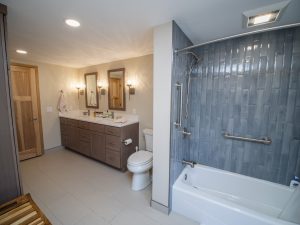
- A full bathroom, which as in any basement means running plumbing below the slab.
- A legal bedroom with an egress window, cut into the foundation wall if the basement doesn’t already have one. Our guide to egress windows in Dane County covers what that involves.
- Often a separate entrance, so the unit functions independently. Unless the basement is already a walkout, building one from scratch can easily run $20,000-$25,000 on its own.
- Proper moisture control, insulation, heating, and ventilation to make the space genuinely comfortable and code-compliant year-round. More on that in our basement remodeling ideas guide.
Each of those is a project in itself, which is why an ADU costs more than a rec-room finish.
What Does It Cost?
Looking back at the basement finishes we’ve completed over the past year, a bedroom-and-full-bathroom basement (occasionally with a small wet bar) typically runs $120,000-$185,000, based on our own project history. None of those recent projects included a full kitchen or a new egress window, though, which is worth flagging: without a full kitchen, what you have is a great finished basement, not a legal ADU under Madison’s definition.
Add a full kitchen (plumbing, electrical, cabinets, counters, and appliances) and the cost climbs meaningfully above that baseline; that’s the piece that actually makes it an ADU rather than a finished basement. And unless the basement is already a walkout, a separate entrance is a real cost on top, often $20,000-$25,000 on its own.
Put together, a true basement ADU — kitchen, bathroom, bedroom, and entrance — generally lands well above a standard finish, often in the $175,000-$250,000+ range in our experience, depending on kitchen finish level and how much entrance work is required. The upside is that few basement projects add as much long-term flexibility or potential income.
These are general ranges based on our own project history. We’ll give you a real number once we see the space.
Is It Worth It?
For the right household, an ADU is one of the highest-utility things you can do with a basement. It can keep family close while giving everyone privacy, generate rental income in a tight Madison housing market, and add lasting flexibility and value to the property. The key is going in with eyes open about the scope (this is a full small home, not a finished basement) and confirming the rules before you design around them.
What Beckman Builders Includes
Beckman Builders has finished and converted basements across the greater Madison area since 2003, including in Windsor, DeForest, Sun Prairie, and throughout Dane County. We’ll help you understand what your lot allows, design a unit that meets code and actually feels like home, and handle the permitting and moisture details that make or break a basement project. We’re licensed and insured in Wisconsin. See more on our basement remodeling page.
Frequently Asked Questions
What is an ADU?
An accessory dwelling unit is a smaller, self-contained home, with its own kitchen, bathroom, sleeping area, and entrance, on the same lot as a single-family house. Basements, attics, and garages are common places to create one.
Can I legally build a basement apartment in Madison?
In many cases, yes. Madison has eased its ADU rules in recent years to allow conversions of existing space like basements. But size limits, owner-occupancy, entrances, and parking rules apply and vary by municipality, so confirm the current ordinance for your specific lot before planning.
What does a basement need to become a legal ADU?
Typically a full kitchen, a full bathroom, a legal bedroom with an egress window, often a separate entrance, and proper moisture control, insulation, heating, and ventilation. It’s a complete small home, which is why it’s more involved than a standard basement finish.
How much does a basement ADU cost in the Madison area?
A finished basement with a bedroom and full bathroom alone often runs $120,000-$185,000 based on our recent project history. A true ADU needs a full kitchen too, and often a separate entrance, which push the total higher, typically into the $175,000-$250,000+ range. The exact figure depends on size, finishes, and how much entrance work is required.
Do I need permits for a basement ADU?
Yes. A basement ADU involves building, electrical, plumbing, and zoning approvals, and it must meet code as a dwelling unit. A licensed contractor handles the permitting and inspections.
Curious whether your basement could become an ADU? Beckman Builders can help you check what’s allowed and what it would take. Request a free consultation or call (608) 846-3341, and we’ll walk through your space, the local rules, and your options.