Mudroom Addition Ideas For Wisconsin Winters: Layouts, Storage, And Flooring That Survives Salt
Key Takeaways
- The best mudrooms are built around the door you actually use, not the one you want to use.
- Wisconsin mudrooms need materials that laugh at slush, grit, and salt.
- A bump out addition can create a drop zone without a huge footprint.
- Storage works only when it matches real life items like boots, backpacks, and bulky coats.
- Comfort matters. A mudroom that feels cold and drafty will not get used the way it should.
The Wisconsin Entryway Problem Nobody Brags About
If you live in Wisconsin, you know the scene. It is late January. The driveway is crunchy. Boots are wet. Coats are bulky. Someone comes in carrying groceries, and the entryway becomes a traffic jam of people and gear. You try to keep salt off the floors, but the floor does not care about your intentions.
That is why searches like “mudroom addition Madison WI” are usually driven by a very practical desire. People are not dreaming of a perfect photo. They are dreaming of walking in the door and not immediately stepping on a shoe, a backpack, and a dog leash at the same time.
Mudrooms are not glamorous. They are functional relief. And when they are done right, they make daily life feel calmer without anyone making a big speech about it.
Start With The Door You Actually Use Every Day
A lot of homes have two entry realities. The front door is for guests. The side door or garage entry is for real life. The biggest mudroom mistake is designing a beautiful space around the wrong door.
If your family comes in through the garage, build the system there. If the side entry handles most traffic, focus there. A mudroom is not a “maybe we will use it” space. It is a habit shaping space. Put it where the habit already lives.
The Mudroom Layouts That Work Because They Are Honest
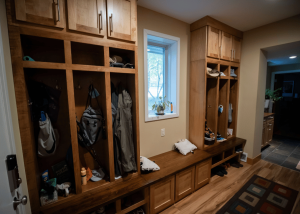
Mudroom layouts work best when they handle three jobs. Sitting, hanging, and containing.
A bench gives people a place to remove boots. Without a bench, people balance awkwardly, and that is when boots get kicked off into the walking path.
Hooks handle coats and backpacks. The key is height. If kids cannot reach hooks, you will get piles. If adults have to crouch, you will get piles. Hooks should be placed for the humans who live there.
Shoe containment prevents the boot mountain. That can be cubbies, open shelving, or a dedicated tray zone. The goal is simple. Shoes should have a home that is not the floor.
If you want extra order, locker style cubbies create assigned space. If you want flexibility, mix closed storage with a few open zones so the room can evolve through seasons.
Why A Bump Out Addition Can Be The Sweet Spot
Some homes do not have room for a full mudroom. That is where “bump out addition Madison WI” ideas come into play.
A bump out is a modest extension that adds just enough depth for a bench and storage wall. It does not have to be huge to be transformative. Even a small amount of added space can turn a cramped entry into a functional drop zone.
The best part is that a bump out can solve the problem without reshuffling the entire floor plan. It can also reduce how much winter mess travels deeper into the home, because you are creating a real buffer zone.
Flooring Choices That Actually Survive Winter
Mudroom flooring needs to be forgiving. It needs to handle wet boots, grit, and the kind of salt residue that shows up even when you swear you wiped your feet.
Porcelain tile is popular because it is durable and easy to clean. It handles wet, and it does not mind a boot tray.
Luxury vinyl plank can also work well when you choose a product built for moisture and heavy traffic. It is often warmer underfoot and more comfortable if you are standing while sorting gear.
The wrong flooring choice is usually something that looks nice but hates water. In a Wisconsin mudroom, water wins. Choose the material that makes winter maintenance feel easy.
Storage That Prevents The Pile, Not Storage That Creates It
Storage fails when it is built around an imaginary household. Real households have bulky boots, oversized coats, sports gear, and bags that are not the size of a neat little cube.
Start by counting what actually lands by the door. Include winter boots. Include bulky mittens. Include backpacks with weird shapes. Then plan storage that fits that reality.
A shallow shelf for hats and gloves is helpful, especially if it has a lip so items do not slide off.
A drawer is underrated. It hides the chaotic little things like keys, dog poop bags, hand warmers, and that one screwdriver that somehow lives near every entryway in America.
A tall cabinet can be the seasonal overflow hero. It keeps the space from feeling permanently stuffed.
Comfort Is Not A Luxury In A Mudroom
Mudrooms are often colder because they sit on the edge of the home. If the space feels drafty, people will not use it correctly. Coats will migrate to chairs. Shoes will migrate to the hallway. The system will fail.
Insulation, air sealing, and ventilation matter. You want wet gear to dry. You want the room to feel like part of the home. Even small improvements in comfort can dramatically improve how the space functions.
The Small Design Details That Make It Feel Like A Real Room
Mudrooms can feel like an afterthought if the lighting is harsh or the finishes feel disconnected from the rest of the home. Good lighting changes that. A warm overhead light, plus a little task lighting near the bench, makes the space feel welcoming.
Durable does not have to mean bleak. A mudroom can be simple, clean, and still feel like it belongs. When a functional space feels nice, people treat it better. That is not a moral judgment. It is just human behavior.
How A Mudroom Supports The Whole House
The mudroom is not just about the mudroom. It is about what it protects. Floors stay cleaner. The kitchen counter gets less clutter. The entry hallway becomes walkable again. The whole home feels less chaotic, especially during winter.
If you are considering a mudroom addition Madison WI homeowners rely on to survive winter routines, the best approach is to design around real habits, choose materials that can handle salt, and create storage that fits the actual stuff that shows up every day.
FAQs
How big does a mudroom need to be?
It can be smaller than you think. If you can fit a bench, hooks, and shoe containment without blocking traffic, you can have a very functional mudroom.
Is a bump out addition cheaper than a full addition?
Often, yes. It is usually smaller in footprint, but it still requires proper structure, insulation, and exterior finishing, so cost depends on the home and site.
What is the best flooring for a Wisconsin mudroom?
Tile and quality luxury vinyl are common choices because they handle moisture and grit well. The best option depends on comfort and cleaning preferences.
Should a mudroom include a floor drain?
Most residential mudrooms do not need one. A boot tray and good moisture management are usually enough.
Can a mudroom also be a laundry space?
Yes. The key is airflow, ventilation, and a layout that prevents wet gear and laundry from creating lingering moisture.
Mudroom additions are a great way to create a space where a busy household can keep things organized and ready to go! Call us at 608-846-3341 to schedule a consultation for your mudroom addition